How does the stock and debtors statement work?
For a cash credit or overdraft, it works out each month how much you may draw. Set it up on the loan's Facility card in Lender tools, then click Save:
- Sanctioned limit (₹).
- Stock margin (%) and Debtor margin (%), as in the sanction letter: 25 and 40 unless you change them.
- Debtors counted up to (days old): 90 unless you change it, counted from the invoice date, as banks count them.
- Statement due by (day of the next month), and the First statement month, the month just ended unless you choose another.
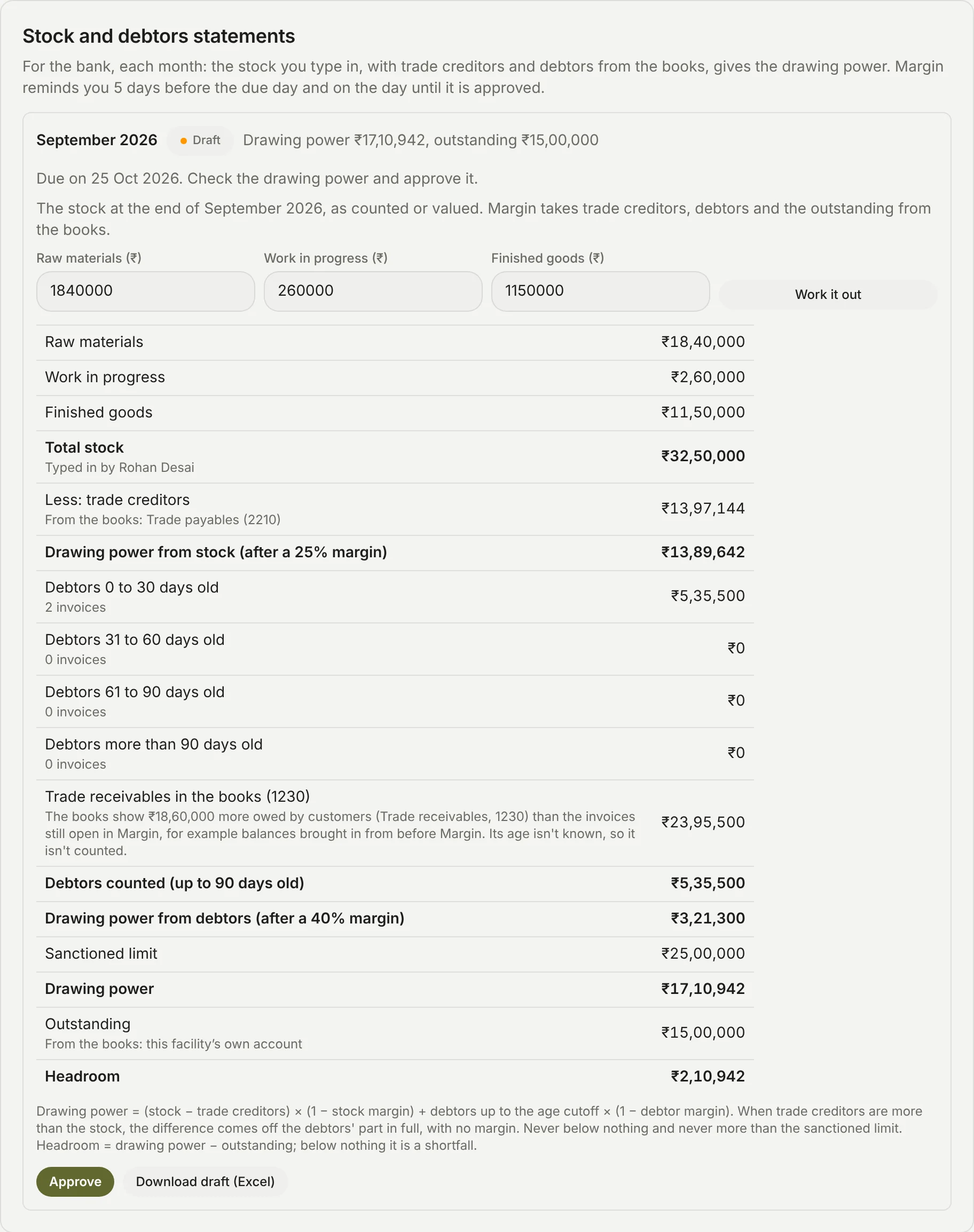
Each month from the first up to the month just ended, the last 12 at most, then has a statement under Stock and debtors statements. Type in the stock at the month's end, as counted or valued (raw materials, work in progress and finished goods), and click Work it out. Margin takes the rest from the books:
- Trade creditors: Trade payables (2210), taken off the stock.
- Debtors: the invoices still open at the month's end, by age from the invoice date, such as 0 to 30 days old, counted up to the age you set. If the books' Trade receivables (1230) show more than the open invoices, such as balances brought in from before Margin, Margin says so and leaves the difference out, as its age isn't known.
- Advances from customers (2290): shown when there are any, not taken off the debtors.
- Outstanding: the balance of the facility's own account.
Drawing power = (stock − trade creditors) × (1 − stock margin) + debtors up to the age cutoff × (1 − debtor margin). When trade creditors are more than the stock, the difference comes off the debtors' part in full, with no margin. It's never below nothing, and never more than the sanctioned limit. Headroom is the drawing power less what's outstanding; below nothing, it's a shortfall.